
Movement for Complex Pain Masterlcass
You were never too weak or complicated to move. You were asked to start on step four and not given strategies that work with what your body is telling you and why.
Join Resilient Warrior Coaching and Kompleksinen Kaksikko Foundation for this live 2-hour collaboration event on how to actually begin moving again when you live with complex pain or neurological conditions like CRPS, hypermobility, fibromyalgia, nervous system dysfunction etc.
Taught in English, with live Finnish interpretation throughout.
📅 Date: Friday, September 25, 2026
🕕 Time: 8:00 AM US Pacific · 6:00 PM Finland
⏱️ Length: 2 hours, including live Q&A
🗣️ Language: Taught in English with live Finnish interpretation throughout
▶️ Replay: Lifetime access to webinar recording, included with every ticket
🎁 Live bonus resource: The Desensitization Guide, for live attendees
💵 Price: $49 USD · Kompleksinen Kaksikko Foundation members get 50% off
Upon registering, you will be added to the RWC email list to receive communications about this event from Justine moving forward.
This class exists because of Karla and I’s work together.
Karla came to work with me one to one, not long after CRPS came into her life. We spent months together on exactly the material in this class: how to calm a nervous system down far enough that movement becomes possible again, and then how to build back up without losing everything to a flare. Movement is one of the most powerful tools to change complex, persistent pain - but it is also one of the hardest things to integrate in a way that actually doesn’t make it worse. That is my passion, why I do what I do, and what my work with complex patients like Karla focuses on.
Since our time together, Karla has gone on to advocate for patients and make in a difference as well, building something I admire enormously. Kompleksinen Kaksikko exists so that people in Finland living with complex pain conditions do not have to work all of this out alone, the way most of us did. Access, education, stigma, and bias towards chronic pain and poorly understood conditions can be particularly problematic, leaving patients without the recourses and support they need to improve their quality of life and decrease symptoms.
It is unacceptable, and we can do better - so we are. When Karla asked if I would teach her community, I said yes before she finished the sentence. We have been planning this for a long time, and are so excited to peel back the curtains on these techniques all pain patients deserve and can use. This is the class I wish someone had given me at the beginning, and it is the one I most want in the hands of people who are still being told to just keep moving without the proper education, tools, and context to do so successfully.
This is particularly challenging in places where access and understanding around complex conditions is particularly lacking or judgmental towards patients when the medical system does not treat it or have answers. My work in the United States, and globally, sets out to change this difficult reality for patients here and abroad - and I am so happy and excited to extend this education to the Finnish pain community.
“I have had the pleasure to work with Justine for a couple of months. It has been the best decision I have done since I got CRPS. Justine is a true professional in her field... If you want to learn how to live your best life with CRPS, are ready to make some changes, and are looking for someone to guide you on the way, you should book a call with Justine.”
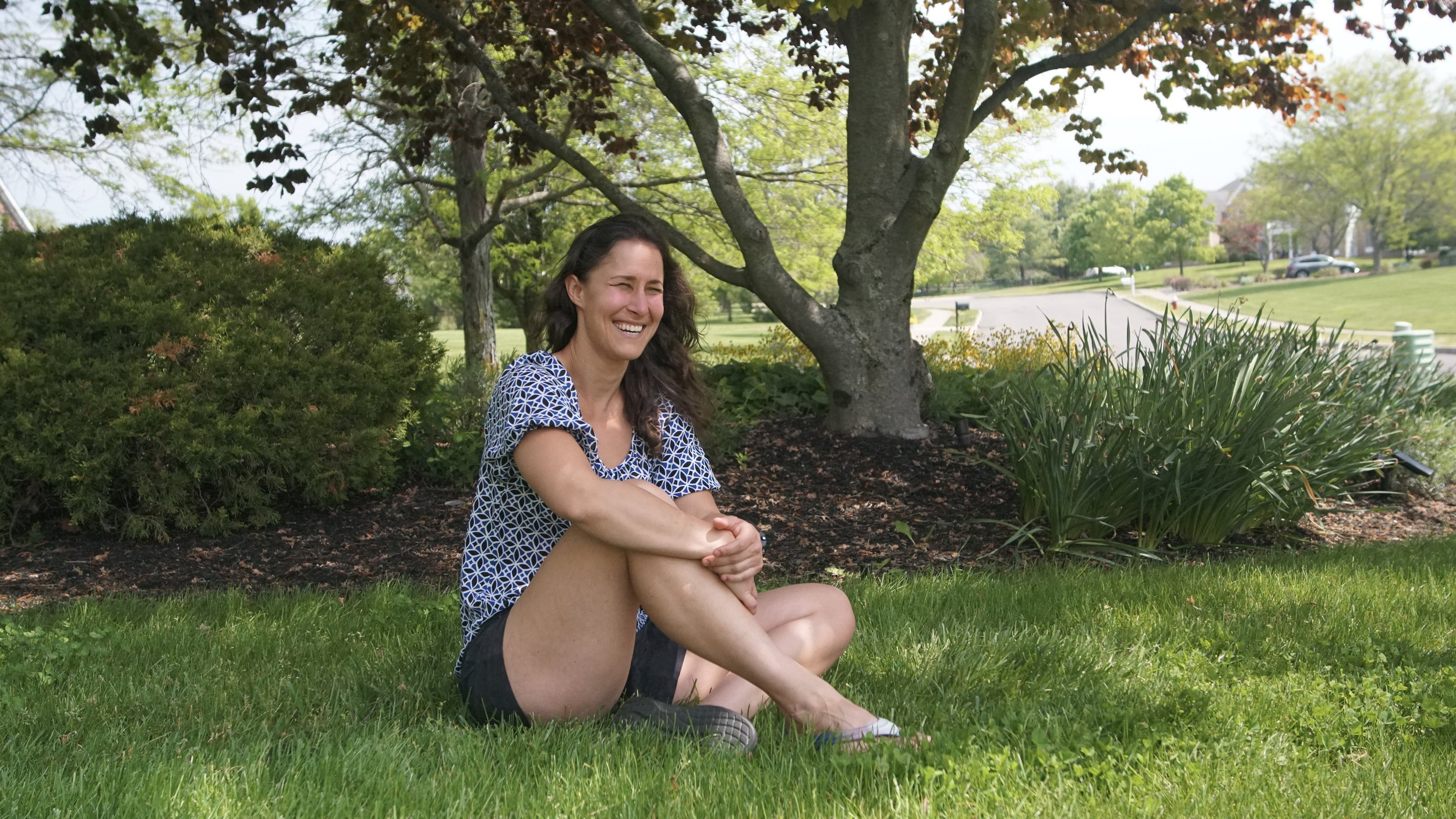
You have probably already tried. You graduated from physiotherapy. Maybe you tried a gym, or a class, or a personal trainer, or an app on your phone. You were told to keep moving. To stay active. That motion is lotion. So you tried. And you flared. Sometimes for days. Then you were told you were de-conditioned. Or afraid of movement. Or not trying hard enough...
Here is what I want you to hear, and it's the reason I'm teaching this class. Movement did not fail you. The system did. Most people with complex pain have already done everything that was asked of
them. That is not the problem. The problem is that almost every movement program in existence is written for a nervous system that is interpreting sensation normally, and yours is not.
Join us for this live 2-hour class on how to actually begin moving again when you live with CRPS, hypermobility, fibromyalgia, or another complex pain condition. Taught in English, with live Finnish interpretation throughout.
Why complex patients fall through the cracks
Movement is sensory input. Position, vision, balance, touch, pressure, all at once. A sensitized nervous system amplifies sensation, so it amplifies movement too. Nobody explains this, and without it none of the rest makes sense.
Physiotherapy is important, and it is often incomplete. Manual work and corrective exercise matter, but without the sensory piece your body keeps defaulting back to the same movement pattern. To change the motor output, you have to change the sensory input.
Nobody bridges the gap. You get discharged from physiotherapy and handed back to a world of gyms and classes that were never designed for a body like yours.
Allodynia gets treated as a side note. If you cannot tolerate a bedsheet, being told to go for a walk is not a plan. The sensitivity has to come down first, and there is a real method for that.
When it goes wrong, you get blamed. The label lands on you rather than on the plan. That is the part that makes people stop trying, and it is the part I am angriest about.
So we do it in the right order, with the right tools.
This class is built around four steps, in sequence. Almost everyone is trying to start at step four, and that single fact explains most of the failure, most of the flares, and most of the blame.
Rebuild the map. Give your brain a clear, safe picture of the area again.
Calm the input. Bring down the alarm on touch, texture, pressure and temperature.
Connect the senses. Bridge from imagined movement to real movement.
Load it. Stability first, then gentle cardio, at a pace your system can absorb.
By the end of two hours you will know which step you are actually on, what to do now, and where to go next. For most people, that alone changes everything. It gives you hope, a plan, and removes shame and blame.
We created this masterclass so I could show you the relatively simple principles and techniques that allow even the most complex patients to integrate more movement and mobility successfully, in a way that respects where your nervous system is at - but can also change and improve why the response is so intense and intrusive.
Upon registering, you will be added to the RWC email list to receive communications about this event from Justine moving forward.
What We Will Cover
Why movement keeps failing you: The pattern almost every complex patient goes through, and the four reasons it happens. Why being told you are de-conditioned or afraid of movement usually misses what is actually going on.
Movement is sensory input: The concept nobody explains, and the one that makes everything else make sense. Your nervous system does not process movement separately from sensation, which is exactly why a sensitized system amplifies it.
Step One: Rebuild the Map
How persistent pain blurs your brain's picture of the painful area, and how to sharpen it again. Guided motor imagery, in three stages, with the dosing.
Step Two: Calm the Input
The heart of the class. Textures, surfaces, compression, tape, toe spacers and temperature, staged from gentlest to hardest, with real numbers. This is the part you can start the same day.
Step Three: Connect the Senses
The bridge between imagining movement and actually doing it. Mapping, naming, and stacking your senses so your brain has enough information to move well.
Step Four: Movement, Gently Loaded
Warm-ups that prepare your nervous system rather than your muscles. Release work, and why it is easy to overdo, especially if you are hypermobile or highly sensitized. Stability first, then gentle cardio.
Pacing, flares and knowing when to stop: Post-exertional malaise, orthostatic intolerance, and when building up gradually is the wrong tool entirely. The 24-hour rule. What to do when you flare, and how to track it.
Who IS This For?
You live with CRPS, hypermobility (hEDS or HSD), fibromyalgia, ME/CFS, long COVID, POTS, small fiber neuropathy, or another complex pain condition.
Every time you try to move more, you flare, and you have stopped understanding why.
You have been told you are deconditioned, and you know in your body that it is more complicated than that.
Touch hurts. Clothing, bedsheets, water in the shower, a breeze on your skin.
You have graduated from physiotherapy and been left with no idea what to do on your own.
You want to understand what is actually happening, not just be handed a list of exercises.
You care for someone in this position and want to understand what they are dealing with.
Who Is This NOT For?
I would rather you know before you pay.
This is not a personalized program. It is group education. I will not be assessing you individually.
This is not a diagnosis and it is not medical advice. Keep working with your own medical team.
This is not a cure, and I will not pretend it is. Complex pain does not work that way.
This is not strength training. We deliberately stop before weights and programming, because that work needs individual guidance.
This is not clinical training. Clinicians and movement professionals are genuinely welcome, but everything is built and spoken for patients.
What You Will Walk Away With:
An understanding of:
Why movement flares you, in plain physical terms, and why that is not a personal failing.
What a brain map is, how yours has changed, and why your body avoids parts it no longer recognizes clearly.
Why weakness in complex pain usually is not about muscles at all.
The difference between working with pain and pushing through it, and why one of them makes you worse.
When building up gradually is the right approach, and when it is genuinely the wrong one.
And tools for
A staged texture and surface plan for allodynia, with real numbers for how long and how often.
The three stages of guided motor imagery, and how to know when you are ready to progress.
A temperature tolerance approach you can start in your own shower this week.
A warm-up structure built for a sensitized nervous system rather than an athlete's.
The 24-hour rule for telling a normal response apart from a flare that means stop.
A simple tracking method, because progress in tolerance is nearly invisible without one.
Language for your own appointments, so you can explain what you need and why anything during this class.
One more thing:
I am not going to sell you anything during this class. There is no program at the end, no upsell, no countdown timer. I will mention once that I work with people one to one on movement, and then I will get back to teaching.
I have been the patient in this story. I could not get around my own house or put my foot on the ground for almost a year and a half at the beginning of my CRPS journey. Like I was, the people I work with were told to move more by people who could not tell them how, or told they were not trying by people who had never spent a day let alone years in our bodies. What changed things for me was understanding the order, and then being given the actual tools, in the actual sequence, so I could consistently progress over time without overwhelming my body. That’s how movement becomes one of our most powerful tools, rather than something we avoid.
That is the whole class. I would love to see you there.
Upon registering, you will be added to the RWC email list to receive communications about this event from Justine moving forward.
How the Workshop Works
-
Two hours, live. Roughly the first part is teaching and demonstration, and a substantial block at the end is live questions, because that is usually where the most useful things get said.
Taught in English, with a live interpreter working into Finnish throughout. You will be able to follow the whole session in Finnish.
Two hands-on demonstrations you take part in from wherever you are sitting. No equipment needed, just whatever is within arm's reach.
Questions welcome throughout, not only at the end. Ask them in the chat as we go.
Everything is recorded, and every ticket includes lifetime access to the replay. If the time does not work for you, or if you are having a bad day, you have not lost anything.
-
Live webinar date: September 25th, 2026.
🌍 A note on the timing. 6:00 PM in Finland is 8:00 AM where I am in San Diego. I am very happy to be up early for this.
-
$49 USD for the live class and lifetime access to the replay.
<aside>
🎁 Kompleksinen Kaksikko members pay $25 USD, a 50% discount. Karla will send you the code to enter at checkout. If you are a member and you have not received it, contact her directly rather than me, she looks after the member list.Prices are in US dollars. Your bank will convert at the rate on the day.
-
Everyone who attends live gets my Desensitization Guide, a printable resource covering allodynia, sensory sensitization and motor inhibition. It is the staged, dosed version of the material we work through together: the texture ladder, the surface progression, guided motor imagery, temperature tolerance, and the safety rules.
It is written so that you can use it yourself and hand it to your own physiotherapist or doctor. Yours to keep.
Don’t miss out on this unique education that is crucial for complex patients struggling to be seen, understood, and supported in a system that too often lacks the resources, support and understanding for our unique challenges and realities.
Upon registering, you will be added to the RWC email list to receive communications about this event from Justine moving forward.
Testimonials
Frequently Asked Questions:
-
I enjoy seeing you on screen, but please come as you are comfortable - screen on or off. I will ensure it is an uplifting, enjoyable, safe space but there is no pressure to be at your best or participate in any way you are not comfortable.
-
Upon entering your purchase information, you’ll be added to the RWC and KK Foundation newsletter list so we can send you specific information for this event that will include details like the Zoom log-in info.
-
Kompleksinen Kaksikko Foundation members get 50% off this webinar, and will get discounted rates for future events as well. It is just $20 for yearly membership for the Foundation. When you click the buy button, you will be directed to the check-out page. At that point, you will enter the coupon code you received in your Foundation membership registration and confirmation of this event, that will be applied to your purchase price when you enter your payment information.
-
Yes. You get lifetime access to the entire webinar including the presentation, technique/movement demonstrations, and the Q&A, so please sign up for this resource whether you are able to attend live or not. We will send out the recording within 24 hours of the event.
-
That is literally why we are doing this event! This is specifically to reach Finnish audiences who have even less access to this crucial education and strategies than here in America. There will be professional English to Finnish translation in parallel throughout the event you will have access to on your own feed on Zoom.