How Many Reps Should I Do?
A question I get asked all the time is, "how many reps should I do?" And I know the answer of 'it depends' can feel deeply unsatisfying, but it is because it does depend - on your stability.
“How can I tell when my stability is breaking down” is really, the better question.
In this blog, I am going to teach you where that line is and go through two example pressing and side bending exercises and sensory cues you can integrate to improve hip stability, so you can try some things out in the gym and feel the shifts in your own body!
One of the hardest parts about living with chronic pain is not being able to fully express ourselves – or doing so having quite a cost. Strength training is imperative, but doing it in a way that is challenging enough without ignoring cracks in the foundation we develop living with various pain drivers is the challenge.
It is not wrong to want to push yourself in ways with chronic pain/illness, but it’s crucial to have the awareness and strategies to integrate stability so we aren’t engraining poor movement patterns that perpetuate dysfunction to get the upside.
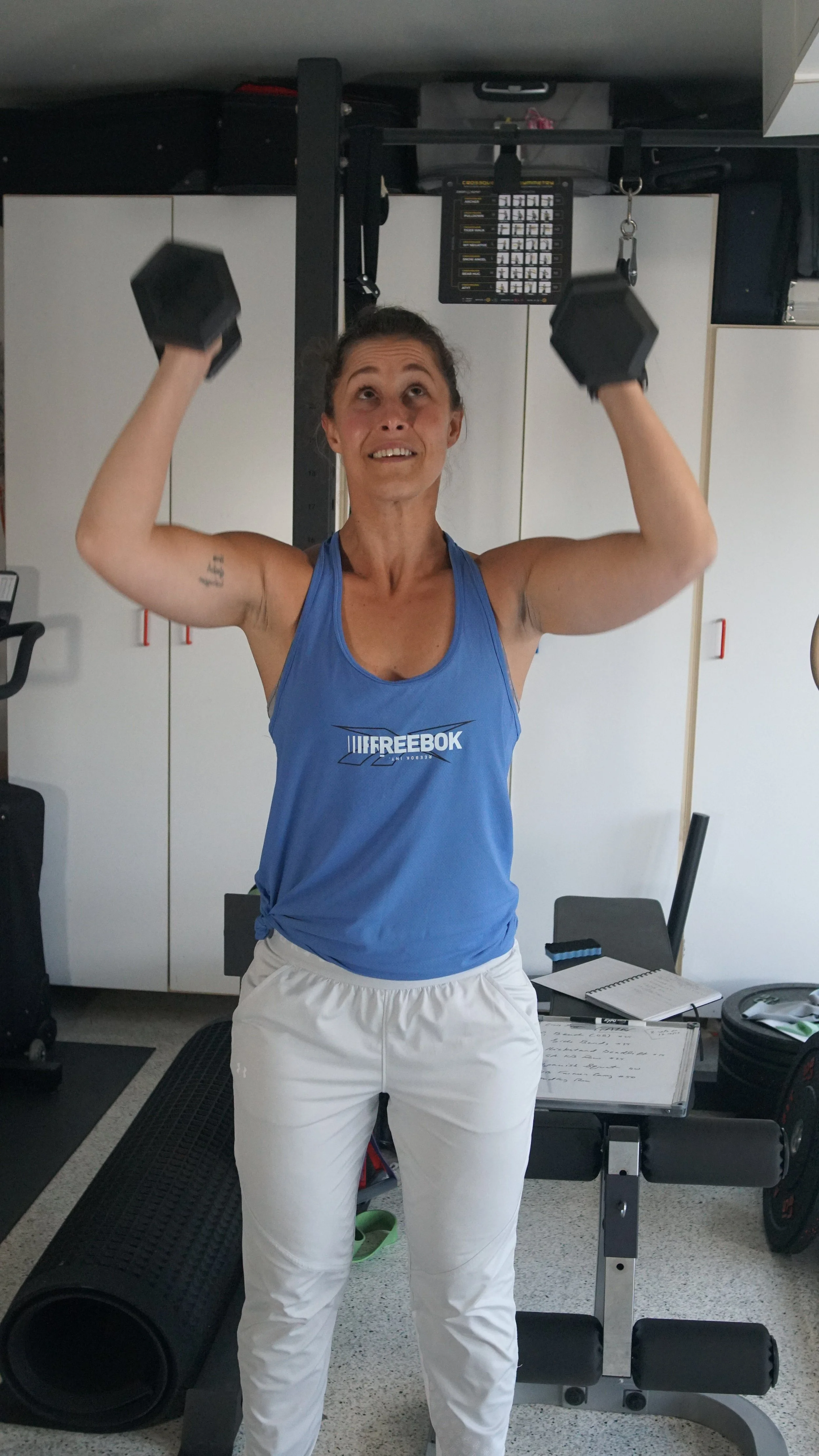
Pressing:
With pressing, it’s not just shoulder stability and mobility, but spinal and hip stability that play a role. If the goal is to build muscle, we want as much weight as we get a good response from and only have a few reps in reserve with, but without it being so heavy we have to compensate to get the weight up. Being hypermobile, my scapular stability is always a work in progress, but my spinal and hip stability are my real limiting factors.
In this seated dumbbell press, you can see as my arms fatigue, I begin to wobble and move more at my core and his. This is the point at which you’re now entering more competitive plasticity, reverting to poorer motor patterning.
Tip: If you’re foot and hip stability or core strength is still limited, bench or seated options are much better because you can use your body and ground to give you more proprioceptive sensory feedback.
Three sensory cues to integrate to increase stability in this position:
👣 Add a proprioceptive cue and maintain the pressure at your butt, and feet on the ground or position of the weight in your hands if you can feel that well.
👀 Add a visual cue you stay centered on rather than wobbling from.
🥣 Add a vestibular cue, imagining your head is half filled with pudding or water and you don’t want to drop an inch out any direction as you bring the weight up/down.
These are some of the cues I’m using to keep myself more steady and stable in this seated dumbbell press, until the resistance overtakes them. That's the point at which you’d want to stop.
What about an example of hip stability in core work?
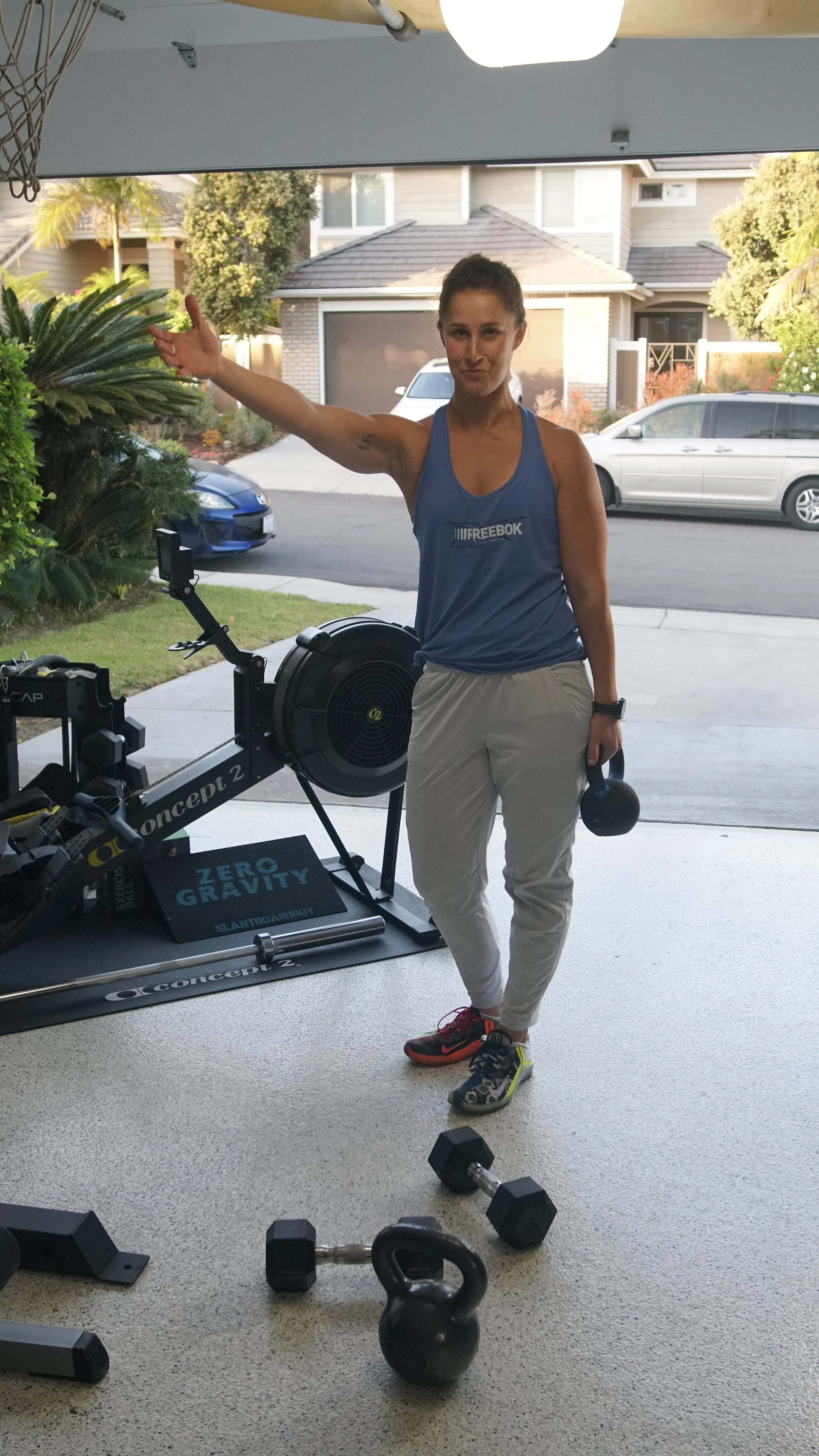
Side Bending:
With this core side bending exercise, when we push our hips out, we’re not just losing stability there, but moving more from there rather that our spine – which is what we’d want in this pattern. Decreasing that movement at your hips, makes your brain have to choose another way to attempt to complete that motion.
🖐️ Rather than initiating so much at the hip, we add a sensory constraint with our hand you then try not to increase the pressure into.
This improves the movement from my spine instead of subconsciously stealing that range by jutting that hip out. Didn’t feel that one make a big difference? That area may be hard for you to sense pressure, or it may not be where you are personally shifting from the most as I do in this movement.
Focus more on the sensory cue input than your movement output, and that will take care of itself.
Other sensory cues you can try to increase stability:
👣 Add a proprioceptive pressure cue in a different spot, noting where the pressure increases dramatically at your feet rather than at your hips as you bring the weight down/up, and try to minimize that.
👆If you are moving a lot at your head, you could add a 2-point finger proprioceptive cue at the jaw and shoulder, again providing a guardrail to movement there, so your brain has to pick somewhere else to move from.
👀 Layer on a visual cue, giving your brain more awareness about where you are in space relative to something else.
You can see how the sensory cues we add, depend on your unique compensation. This is truly a truly individualized, brain-based approach to movement.
To change movement with chronic pain, you can’t keep inadvertently engraining the same patterns, which is what often happens in typical settings. Your brain needs different information to work with, so you get a different outcome.
Doing the same thing, produces the same results.
If you want to understand where your movement is breaking down, and how to actually change why it’s happening so you can get out of pain more and build stability and strength, book a discovery call to learn about how we’d approach 1:1 individual sessions for you goals.